 Texas is home to hundreds of ant species, but only a portion regularly create problems around homes. Identifying the ant you are seeing is important because different species have different nesting habits, food preferences, and treatment needs. A method that helps reduce one species may cause another colony to spread or relocate.
Understanding the most common types of ants in Texas can help you recognize warning signs, address conducive conditions, and determine when professional service is appropriate.
Texas A&M’s Urban and Structural Entomology Program lists numerous ants that may be encountered across the state, including carpenter, Argentine, odorous house, pharaoh, acrobat, crazy, and leaf-cutting ants.
Here are several ant species in Texas that homeowners commonly notice:
Fire ants are reddish-brown and typically build visible soil mounds in lawns, gardens, and other sunny areas. When their nest is disturbed, workers may respond aggressively and sting repeatedly. Their stings can cause burning, itching, and raised pustules.
Unlike many native ants, red imported fire ants are invasive. Their colonies may contain one or multiple queens, allowing populations to expand quickly under favorable conditions.
Carpenter ants are among the largest ants found around Texas homes. Depending on the species, they may be black, reddish, brown, or a combination of colors.
These ants do not eat wood. Instead, they excavate galleries in wood to create nesting areas. Activity may indicate moisture-damaged or decaying wood near:
Small piles of wood shavings or winged ants indoors can be signs of a nearby colony.
Odorous house ants are small and usually dark brown or black. When crushed, they may release an unpleasant odor often compared to rotten coconut.
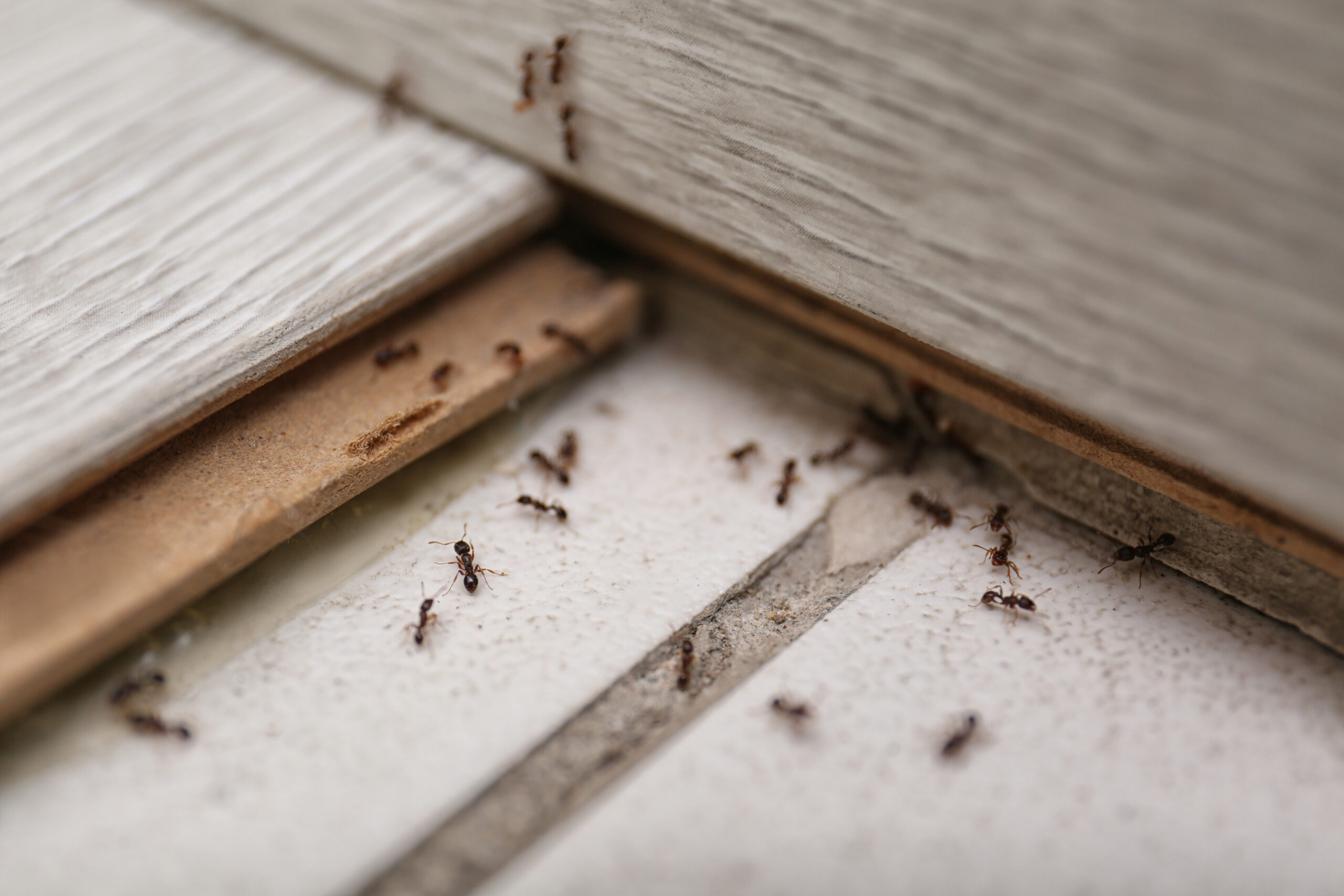
They frequently trail along counters, baseboards, foundations, and plumbing lines while searching for sugary foods and moisture. Because colonies may have multiple nesting sites, spraying visible workers may not address the source of the infestation.
Tawny crazy ants are light brown and move quickly in irregular patterns rather than following orderly trails. They can form extremely large colonies and may gather around landscaping, electrical equipment, wall voids, and other sheltered locations.
Correct identification is especially important because these ants may require a different service strategy than fire ants or common indoor ants.
Pharaoh ants are very small and range from yellow to light brown. They often nest in warm, protected indoor areas near kitchens, bathrooms, appliances, and plumbing.
Improper treatment can cause a colony to divide into multiple colonies through a process called budding. For this reason, persistent pharaoh ant activity should be evaluated carefully before products are applied.
Acrobat ants are often brown, black, or reddish and may raise their heart-shaped abdomen when disturbed. They can nest outdoors under bark, stones, or landscape materials and indoors in damp or damaged wood.
Basic prevention can help reduce the food, water, and shelter ants need:
Consider professional assistance when ants return after repeated cleaning, appear in several rooms, emerge from walls, build numerous outdoor mounds, or create a stinging risk.
HomeTeam Pest Defense can inspect homes for pests, identify likely nesting and entry areas, and recommend targeted services that help reduce ant activity. Local assistance is available through ant control Houston, ant control Dallas, ant control Carrollton, ant control Austin, ant control Fort Worth, and ant control San Antonio.
Identifying the species is the first step toward choosing an appropriate response. By reducing moisture, removing food sources, sealing entry points, and seeking help for persistent colonies, homeowners can make their properties less attractive to ants.
Contact HomeTeam Pest Defense to schedule service and get help identifying and addressing ant activity around your Texas home.
Would you like to call 844.372.7552?
×Would you like to call 844.372.7553?
×Would you like to call 844.372.7558?
×Would you like to call 520-900-5731?
×Would you like to call 844-574-1560?
×Would you like to call 844-372-7552?
× Find My Branch
 Call Now: (877) 461-7378